Showing posts with label EU. Show all posts

Sunday, 22 June 2014

HBP's attempt to build an artificial brain

In my last post I mentioned the Human Brain Project briefly and wrote that its major aim is to construct an emulation of the human brain. In this post, I am going to discuss in a little more detail how this project is going to do this and who stands behind it.

The HBP is funded by The European Union which contributed about 1 billion Euros and is coordinated by neuroscientist Henry Markram. The project is managed from the Swiss Federal Institute of Technology (EPFL) in Lausanne, Switzerland.

Henry Markram
In a nutshell, the initiative's major goals are to identify how the human brain operates and, based on this, build a digital model. On this it would ne possible to conduct experiments as conductiing experiments on animals and humans is limited. According to Markram, the researchers are trying to bring together a fundamental understanding of the brain which turns out to be a big challenge as all the knowledge on neuroscience is extremly fragmented. Data, that was published in neuroscience, needs first gathering before it can be applied to a computer.

Another challenge is to translate this gathered data into a computer model. The actual challenge here is to not only consider individual neurons but ro regard the whole picture, including all the connections between synapses. In other words, the first step is to harvest all the technological mysteries of the brain (how it transmits, processes and stores information) in order to, in the second step, construct a supercomputer.

In 2006, HBP developed a computer simulation of the neocortical column of a rat and it behaves precisely like its biological example. Although this column is only about 2 mm long, it contains about 10,000 neurons and 30 million synapses. This emulation is the most advanced supercomputer and is, compared to the neocortex, a huge construct.

The IBM Blue Gene/L supercomputer
Of course, the human brain contains many more neurons and synapses and its simulation would take up even more space. Not to mention the huge electricity bill.

Althoug this project is facing enormous obstacles, the actual outcome will be one of the most significant results in the study of neuroscience and medicine. By being able to conduct experiments in an innovative way and therefore understanding the brain's functions, it would also be possible for the future human kind to understand its malfunctions.

In a previous post, I summerised a few neurologic disorders, such as Alzheimer's disease. One cane notice that there is no treatment for any of the diseases mentioned. If HBP succeeds, early diagnosis, personalized medicine and advanced medical research would be an advantageous consequence of the knowledge obtained from exact emulation of a human brain.


Sources:
https://www.humanbrainproject.eu
http://motherboard.vice.com/read/the-incredible-challenge-of-digitizing-the-human-brain
https://www.youtube.com/watch?v=f0ZPFffdmXg

Monday, 16 December 2013

Why the Republic of San Marino should not join the EU


Draft #1


(no introduction yet)

San Marino is a very nice place to live, especially when it comes to taxes. Slowly, however, it adapts customary tax systems and in 2009 San Marino was even removed from the OECD list of official tax havens because of that. However, there are still many benefits for citizens of San Marino. The corporate tax and the taxes on interest earnings are relatively low. The income tax is particularly low with about one third of the average EU level. That means that if San Marino does not alter its tax system again, its citizens can still benefit from a very profitable taxing system.

San Marino has been using the Euro since it was introduced in 2002, even though it is neither member of the EU nor part of the Euro zone. This is due to a monetary agreement it has concluded with the EU. In 1998 the agreement was signed by San Marino and Italy, which represented the European Union. It gives the microstate the right to use the Euro and even to mint its own coins, with its own statal design. However, San Marino is not allowed to issue Euro banknotes and the annual maximum amount of money that can be produced is regulated by the EU. These regulations are being renegotiated every year in order to correct some shortcomings in implementation. Prior to the introduction of the Euro as a common currency in the EU, San Marino had a bilateral agreement with Italy, which entitled it to the use of the Italian lira. This illustrates that San Marino has a long history of using the same currency as Italy and its limited volume of self-issued coins seems to suffice for its main purpose.

The euro in San Marino, however, does not only serve as a currency but adds to the income of the microstate. As San Marino is allowed to mint just a limited number of coins, they are very rare and greatly demanded. This is why the coins are sold all over San Marino above their real value and are one of the main factors for the economy. Another important source of income are the San Marino postage stamps as their are very rare, as well. If San Marino joined the EU, they would be allowed to mint more coins and therefore the coins’ value and rareness would decrease. As this is not the case, the coins and stamps are sold mostly to tourists who are visiting San Marino and contributing over 2,2% to San marino’s GDP. So, it depends deeply on tourists crossing their borders.

This is possible because there are no border controls between San Marino and Italy, even though San Marino is not part of the Schengen Agreement. The microstate has entered several bilateral agreements with Italy, including an agreement on the free movement of persons allowing San Marino nationals to work and reside in Italy. Therefore, it is not in the Schengen area de jure but it is considered to be part of it de facto. San Marino has shown openness to consider various options for closer integration with the EU, among it even the consideration of joining the EU. On the 20th of October 2011, the citizens of this microstate voted for or against initial accession discussions. 49.7% voted for “no”, whereas 50.3 % were in favour. San Marino’s citizens have two major issues with the state joining the EU. Firstly, they fear that the Republic’s voice could be ignored by the greater EU states. Moreover, accession would mean the Republic would have to open its borders to 500 million EU citizens. This would harm its highly developed welfare system.

Joining the EU would bring very little benefits for San Marino. The state has a very beneficial taxing system and they already profit from the common currency, even though it is not part of the EU. Tourists can enter the country without border controls just like in the Schengen area and they can even make money by selling their coins/currency. Joining the EU would make them fulfill more requirements and would throw the economy and the welfare system out of balance.


With consideration of the other group's feedback, we corrected a few content problems in our text. Then we changed a lot in terms of language, linking and order of paragraphs: 


Draft #2


This essay addresses various reasons why it would not beneficial for San Marino to join the EU. The Republic of San Marino, a landlocked microstate of 32.000 people in Northern Italy, has expressed the interest for more integration in the EU and even a referendum was held. However, joining the EU would bring about negative consequences, which will be explored in this essay.

San Marino is a has many advantages for its inhabitants, especially when it comes to paying taxes. However, it is slowly adapting customary tax systems and consequently was removed from the OECD list of official tax havens in 2009. There are still many benefits for citizens of San Marino as the corporate tax and the taxes on interest earnings are relatively low. The income tax is particularly low with about one third of the average EU level. If San Marino joined the EU, it would have to adjust its taxing system to the EU requirements, which are even stricter. In short, the tax situation is more advantageous for San Marino if it does not join the EU.

San Marino has been using the euro since it was introduced in 2002, even though it is neither member of the EU nor part of the euro zone. This is due to a monetary agreement it has concluded with the EU. In 1998 the agreement was signed by San Marino and Italy, in which Italy represented the European Union. It gives the microstate the right to use the euro and even to mint its own coins with its own statal design. However, San Marino is not allowed to issue euro banknotes and the annual maximum amount of money that can be produced, is regulated by the EU. These regulations are being renegotiated every year in order to correct shortcomings in implementation. Prior to the introduction of the euro as a common currency in the EU, San Marino had a bilateral agreement with Italy, which entitled it to the use of the Italian lira. This illustrates that San Marino has a long history of using the same currency as Italy and that becoming a member of the EU would not bring significant advantages for San Marino.

The euro in San Marino, however, does not only serve as a currency but contributes to the income of the microstate. San Marino Euro coins are very rare and greatly demanded because of its limited amount. This is why the coins are sold all over San Marino above their real value and are one of the main factors for the economy. Another important source of income are the San Marino postage stamps as their are very rare as well. If San Marino joined the EU, they would be allowed to mint more coins and therefore the coins’ value would decrease. Since the coins and stamps are still valuable now, they are sold to tourists who are visiting San Marino and contributing over 2,2% to San Marino’s GDP.

Another important aspect of San Marino's income is tourism. There are no border controls between San Marino and Italy, even though San Marino is not part of the Schengen Agreement. The microstate has entered several bilateral agreements with Italy, including an agreement on the free movement of persons allowing San Marino nationals to work and reside in Italy. Therefore, it is not in the Schengen area de jure but it is considered to be part of it de facto and would not draw advantages from actually joining the EU as far as travelling is concerned.

Closer EU integration is a highly controversial topic in San Marino. Even if there are no real borders between San Marino and Italy, the state has shown openness to consider closer integration with the EU, among it even joining the EU. On the 20th of October 2011, the citizens of the microstate voted whether or not to initiate accession discussions. 49.7% voted against it, whereas 50.3 % were in favour. Citizens, who opposed the accession, have two main arguments against joining the EU. Firstly, they fear that the Republic’s voice could be ignored by the greater EU states. Moreover, accession would mean that the Republic would have to open its borders to 500 million EU citizens. This would harm its highly developed welfare system.

Joining the EU would bring very little benefits for San Marino. The state has a very beneficial taxing system and they already profit from the common currency, even though it is not part of the EU. Tourists can enter the country without border controls just like in the Schengen area and San Marino can even make money by selling their coins. By joining the EU, more requirements would have to be fulfilled which could throw the economy and the welfare system out of balance.


Saturday, 12 October 2013

EU Individual Paragraph

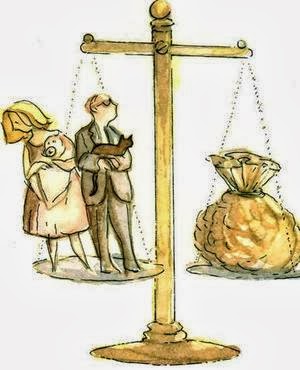
2014 European Year For Reconciling Work and Family Life

My paragraph's way to its perfection.

Draft #1
In 2011 the COFACE, the Confederation of Family Organisation in the European Union, proposed to the European Parliament that 2014 should be the year to focus on work-life balance for EU citizens. The European Parliament approved this proposal to be the EU's focus in 2014. Since then, the COFACE is establishing a policy plan to improve work and family life as our society is evolving towards an Europe where it is challenging for families, especially women, to combine work and having children. Therefore, COFACE's aim is to create a family policy which provides answers for obstacles that are difficult for families in Europe to overcome on their own. Besides work-life balance, other important aims for 2014 are to establish equality for women and men, more job security and a more productive workforce. However, it is not the purpose of the organisation to force anything on families in Europe, but to enable EU citizens to live a decent quality of life. So, in particular for families in the EU, 2014 is a year to look forward to. 
[185 words]


Corrections #1

In 2011 the COFACE, the Confederation of Family Organisation in the European Union,  (interrupts reading) proposed to the European Parliament that 2014 should be the  (sounds too German) year to focus on work-life balance for EU citizens. The European Parliament approved this proposal to be the EU's focus in 2014. Since then, the COFACE is establishing a policy plan to improve work and family life as our society is evolving towards an Europe where it is challenging for families, especially women, to combine (why not use verb referring back to the topic?) work and having children. Therefore, COFACE's aim is to create (wrong collocation) a family policy which provides answers for obstacles that are difficult for families in Europe to overcome on their own. Besides work-life balance, other important aims for 2014 are to establish equality for women and men, more job security and a more productive workforce. However, it is not the purpose of the organisation to force anything on families in Europe, but to enable EU citizens to live a decent quality of (you can't really live a quality) life. So, in particular for families in the EU, 2014 is a year to look forward to. 


Thanks to Alexandra and Dominik for all the constructive tips!


Draft #2


In 2011 the Confederation of Family Organisation in the European Union (COFACE) proposed to the European Parliament that 2014 to be the year to focus on work-life balance for EU citizens. The European Parliament approved this proposal to be the EU's focus in 2014. Since then, the COFACE is establishing a policy plan to improve work and family life as our society is evolving towards an Europe where it is challenging for families, especially women, to reconcile work and having children. Therefore, COFACE's aim is to implement a family policy which provides answers for obstacles that are difficult for families in Europe to overcome on their own. Besides work-life balance, other important aims for 2014 are to establish equality for women and men, more job security and a more productive workforce. However, it is not the purpose of the organisation to force anything on families in Europe, but to enable EU citizens to live a decent life. So, in particular for families in the EU, 2014 is a year to look forward to.
_________________________________________________________________________________

Corrections #2

In 2011 (comma) the Confederation of Family Organisation in the European Union (COFACE) proposed to the European Parliament that (forgot to adjust to correction #1) 2014 to be the year to focus on work-life balance for EU citizens. The European Parliament approved this proposal to be the EU's focus in 2014.  (no need for repetition) Since then, the (organisations do not need articles) COFACE is establishing (I can't believe I got the tense wrong here) a policy plan to improve work and family life as our society is evolving towards an (pronunciation is /ˈjʊərəp/) Europe where it is challenging for families, especially women, to reconcile work and having children. Therefore, COFACE's aim is to implement a family policy which provides answers for obstacles that are difficult for families in Europe to overcome on their own. Besides work-life balance, other important aims for 2014 are to establish equality for (the preposition between works better here) women and men, more job security and a more productive workforce. However, it is not the purpose of the organisation to force anything on families in Europe, but to enable EU citizens to live a decent life. So,  (rather informal) in particular for families in the EU, 2014 is a year to look forward to.  (needs changing)


Thank you, Mirjam and Sonja, for your help!


Draft #3

In 2011, the Confederation of Family Organisation in the European Union (COFACE) proposed to the European Parliament for 2014 to be the year to focus on work-life balance for EU citizens. The European Parliament approved this proposal. Since then, COFACE has been establishing a policy plan to improve work and family life as our society is evolving towards a Europe where it is challenging for families, especially women, to reconcile work and having children. Therefore, COFACE's aim is to implement a family policy which provides answers for obstacles that are difficult for families in Europe to overcome on their own. Besides work-life balance, other important aims for 2014 are to establish equality between women and men, more job security and a more productive workforce. However, it is not the purpose of the organisation to force anything on families in Europe, but to enable EU citizens to live a decent life. Owing to the organisation's efforts, 2014 is a year to look forward to, in particular for families in the EU. 


____________________________________________________________________________________

Corrections #3

In 2011, the Confederation of Family Organisation in the European Union (COFACE) proposed to the European Parliament for 2014 to be the year to focus on work-life balance for EU citizens. The European Parliament approved this proposal. (too short, disconnected sentence that ends apruptly) Since then, COFACE has been establishing a policy plan to improve work and family life as our society is evolving towards a Europe where it is challenging for families, especially women, to reconcile work and having children. (men can't do this) Therefore, COFACE's aim is to implement a family policy which provides answers for obstacles (wrong collocation) that are difficult for families in Europe to overcome on their own. Besides work-life balance, other important aims for 2014 are to establish equality between women and men, more job security and a more productive workforce. However, it is not the purpose of the organisation to force anything on families in Europe, (outside information, not neccessary to include) but to enable EU citizens to live a decent life. Owing to the organisation's efforts, 2014 is a year to look forward to, in particular for families in the EU.


Final Version

In 2011, the Confederation of Family Organisation in the European Union (COFACE) proposed to the European Parliament that 2014 be the year to focus on work-life balance for EU citizens. After the European Parliament approved this proposal, COFACE has been establishing a policy plan to improve work and family life as our society is evolving towards a Europe where it is challenging for families, especially women, to reconcile work and taking care for children. Therefore, COFACE's aim is to implement a family policy which provides solutions for problems that are difficult for families in Europe to solve on their own. Besides work-life balance, other important aims for 2014 are to establish equality between women and men, more job security and a more productive workforce. In short, the purpose of the organisation is to enable EU citizens to live a decent life. Owing to the organisation's efforts, 2014 is a year to look forward to, in particular for families in the EU.